PPWR and the Meat Industry—What’s Next for Packers, Producers, and Retailers
The new EU Packaging Regulation (PPWR) also has a very direct impact on the meat industry. Anyone who packages meat products and places this packaging on the market in the EU must comply with the new requirements. This applies to primary product packaging, such as plastic trays and films, as well as to outer packaging, transport packaging, and e-commerce packaging, regardless of the material or origin.
Our Managing Director, Christoph Waldau, authored a four-part series of articles on the PPWR for Fleischwirtschaft magazine—the articles were published in installments between November 2025 and June 2026. Below, we address the most important points—always with specific reference to the meat industry. Among other things, we examine aspects such as the EU Declaration of Conformity (EU-DoC), recyclability, the use of recycled materials, packaging minimization, and the new approach to transport packaging.
With this article, we aim to help all companies in the meat industry better understand the new PPWR regulations and thereby facilitate compliance with the requirements. First and foremost, a key reminder: Always keep the timeline in mind! The PPWR has been in effect since February 11, 2025, and generally applies as of August 12, 2026. However, many requirements will be phased in gradually: 2028, 2030, 2035, and 2038, in particular, will be pivotal years. Anyone who focuses solely on the current minimum standard today risks having to start all over again the next time they change their packaging.

Who Is Affected by the PPWR?
The key takeaway is this: the packaging manufacturer is not solely responsible. The PPWR allocates responsibilities throughout the entire supply chain. Who assumes which role depends, among other things, on who first makes the packaged product available in a member state and under which brand name it is marketed.
Suppliers
Suppliers of packaging or packaging materials are not necessarily the final party responsible under the law, but they hold a large portion of the information required for this purpose.
A film manufacturer that supplies a meat processor with PA/PE or mono-PE film must provide the producer or manufacturer with the information and documentation needed to demonstrate compliance. This includes, in particular, the information relevant to the technical documentation.
In practice, this means that a meat processor can only fulfill its PPWR obligations if its packaging supplier clearly provides details such as material composition, weights, components, coatings, adhesives, colors, and relevant test or verification documents.
Example: A new MAP top film is introduced. Although the supplier provides the material name and basis weight, they cannot provide reliable information on the barrier layer, adhesive system, or recyclability. To the purchasing department, this may initially appear to be a solvable data issue; however, it poses a real risk to PPWR compliance.
Producers and Manufacturers
Within the meat industry, producers typically play the most important role. A key point here is that anyone who packages meat or sausage under their own name or brand—or has it packaged—is generally considered a producer or manufacturer under the PPWR. The regulation therefore does not define the role of manufacturer based on who produces the film or tray, but rather on who places packaging or packaged products on the market under their own brand.
Accordingly, meat processors, sausage producers, and branded meat product manufacturers are directly responsible for ensuring that the respective packaging meets the relevant requirements, that a conformity assessment is conducted, and that the technical documentation is available. The EU Declaration of Conformity must be prepared in accordance with Article 39 and kept up to date at all times. For single-use packaging, meat product manufacturers must retain the relevant documentation for five years; for reusable packaging, for ten years.
Retailers and Distributors
Retailers aren’t off the hook either. Before placing products on the market, distributors must verify that packaging complies with applicable requirements and that manufacturers and importers are fulfilling their obligations. If there are reasonable doubts, the packaging must not be distributed until compliance is ensured.
Food retailers, be cautious with private-label products: Anyone who brings meat packaging to market under their own private label may find themselves assuming the role of a manufacturer!
Then there’s the operational side: storage, transport, and handling must not compromise the packaging’s compliance. Packaging that works on paper but is damaged by unsuitable storage or transport conditions is therefore not merely a logistical issue.
Importers
Anyone who brings packaging or packaged products into the EU from a third country also assumes responsibility. Among other things, importers must ensure that a conformity assessment has been conducted, that technical documentation exists, that the required labeling is in place, and that the necessary documentation is available. In the context of the meat industry, this applies, for example, to imported packaging trays, films, or pre-packaged meat products from non-EU countries.
The practical implication: Companies should not only consider their own packaging but also create a clear matrix of responsibilities: Who provides which data? Who performs the assessment? Who signs the DoC? Who bears EPR responsibility? And who must share what information with whom?
Which PPWR regulations are particularly relevant to the meat industry
In the following, we will focus on the PPWR articles that are most significant for stakeholders in the meat industry. Nevertheless, companies should always familiarize themselves with all regulations in order to gain a comprehensive overview and complete understanding.
Article 6: Recyclability
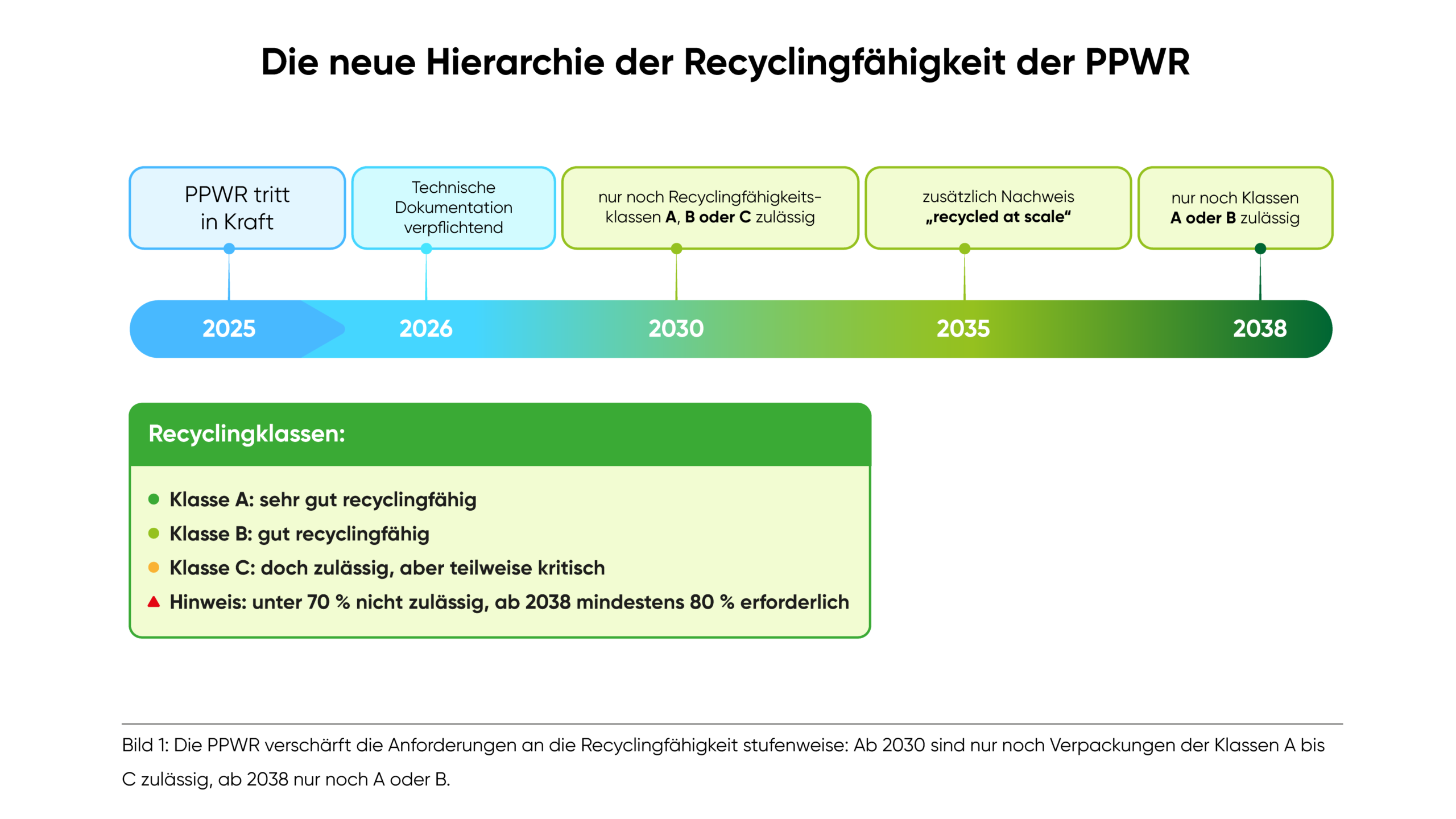
Starting in 2030, packaging must generally be recyclable and achieve at least one of the recyclability levels A, B, or C. The thresholds are as follows:
– >= 95% for A,
– >= 80% for B, and
– >= 70% for C.
Below 70%, the packaging is considered technically non-recyclable. Starting in 2038, Level C will no longer be sufficient; only Levels A and B will be permitted.
For the meat industry, this is particularly relevant for complex composite packaging, such as thermoformed trays with multiple layers of material, barrier films, adhesives, printing, and labels.
It’s not just the main body that counts! ALL relevant components must be included in the assessment. For integrated components, the entire packaging unit must be considered; separate components must be assessed individually.
Starting in 2035, the “recycled at scale” requirement will also apply. At that point, in addition to demonstrating the recyclability of the packaging design itself, it must also be proven that the material is actually collected, sorted, and recycled on a sufficient scale.
Article 7: Recycled Content
Also starting in 2030, plastic packaging must contain defined minimum percentages of post-consumer recycled content. For food-contact packaging made of PET, the requirement is 30%; for food-contact packaging made of other plastics, it is 10%. For all other plastic packaging, a minimum percentage of 35% generally applies. Starting in 2040, these percentages will increase to 50%, 25%, and 65%, respectively.
When it comes to meat packaging, food contact is the key consideration. A plastic tray or film that comes into direct contact with meat cannot simply be made from just any recycled material. The PPWR explicitly provides for an exception if the recycled content could endanger consumer health or would simply result in the packaging violating EU regulations for food contact.
This naturally makes procurement more challenging: food-grade recycled material, availability, quality, odor, color, barrier properties, and regulatory compliance must all align.
Artikel 10: Verpackungsminimierung
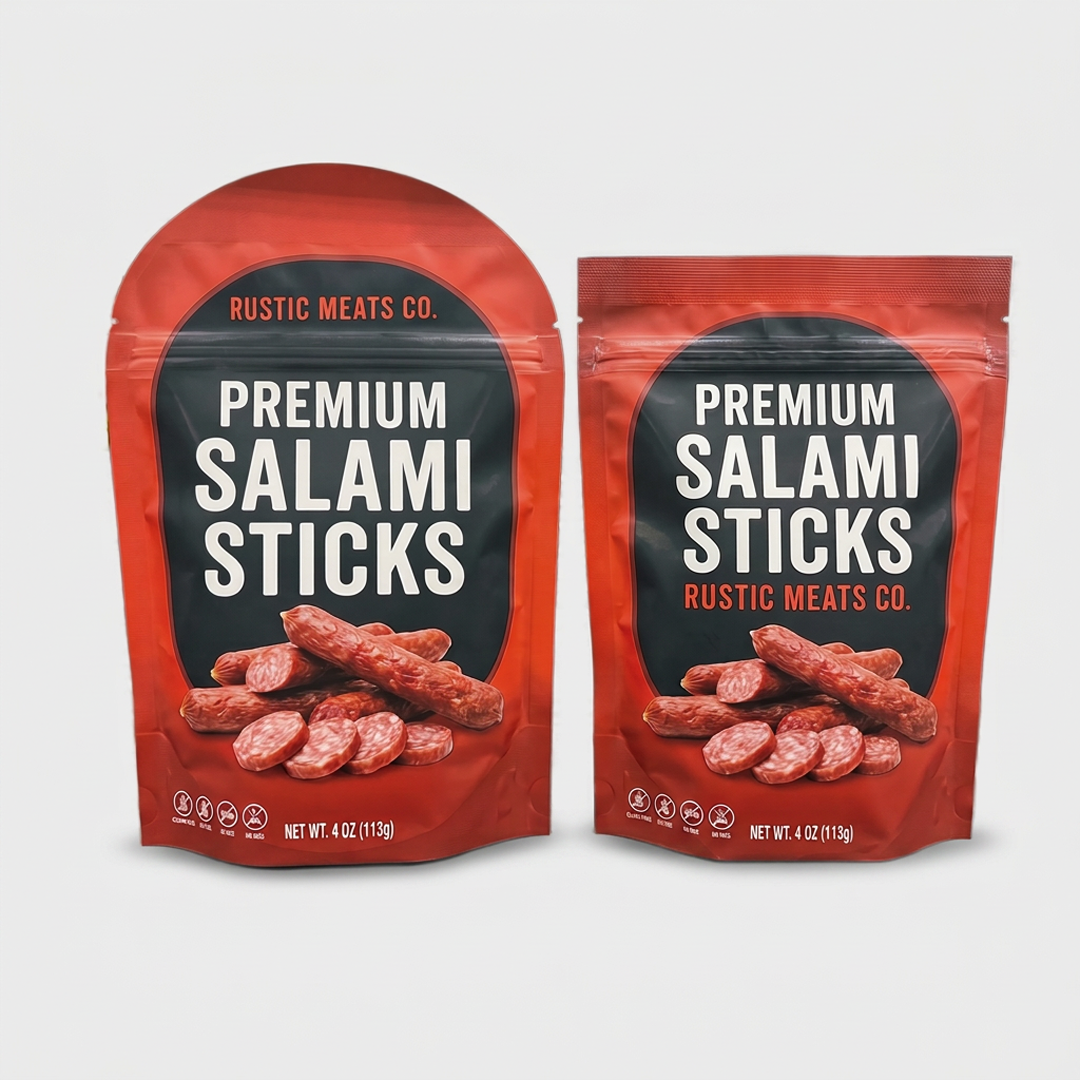
As much as necessary, as little as possible: Starting in 2030, the weight and volume of packaging must be reduced to the minimum required for its function. Packaging with features that merely increase the perceived product volume—such as double walls, false bottoms, or unnecessary layers—is generally not permitted.
For meat products, this is by no means a trivial matter. Logically, a thinner tray cannot automatically be better if it becomes unstable on the filling line, fails when stacked, or compromises product safety. Barrier properties, leak-tightness, seal integrity, oxygen management, and mechanical protection must also be maintained.
The right question, therefore, is not, “How many grams can we save?” but rather, “How little material do we need to achieve the same safe and functional packaging performance?”
Article 24: Vacancy Rate
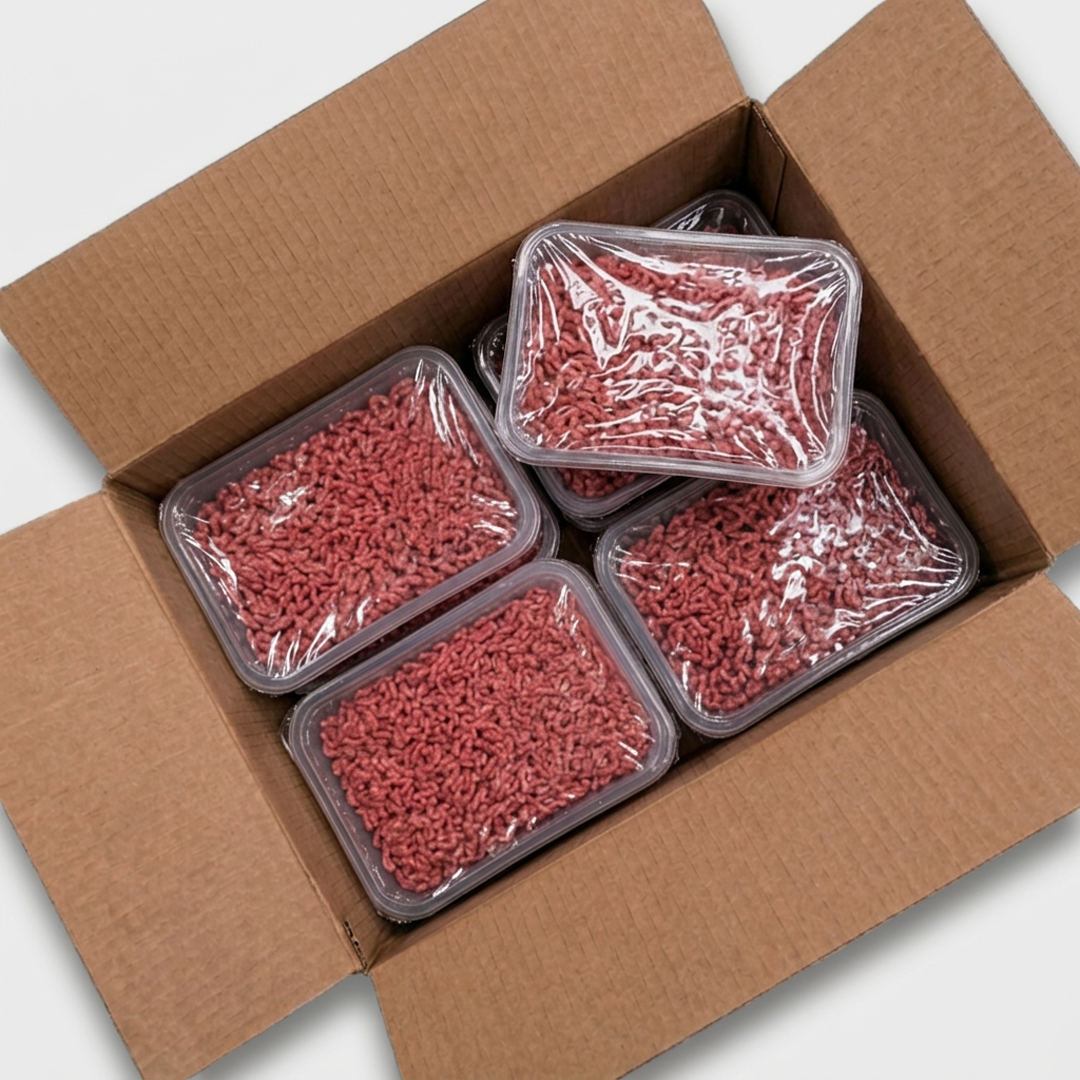
Starting in 2030, outer packaging, transport packaging, and e-commerce packaging will generally be subject to a maximum void space ratio of 50%. The European Commission plans to define the exact calculation methodology and special cases by February 12, 2028. Among other things, this will take into account irregularly shaped products, product protection, and space required for shipping labels.
In the context of the meat industry, this is particularly relevant for shipping cartons, secondary packaging, and logistics systems. A carton in which a small, vacuum-sealed meat product lies “lost” and is stabilized with filler material could become a case for optimization in the future.
Note: The 50% rule is not the same as Article 10. The latter addresses packaging minimization as a whole; Article 24, on the other hand, specifically addresses empty space in certain types of packaging.
Article 25: Prohibition of Certain Packaging Formats
Starting in 2030, certain packaging formats and uses listed in Annex V may no longer be placed on the market. These include, among other things, certain single-use plastic packaging used to bundle products, specific packaging for loose or pre-packaged fruits and vegetables, and various single-use formats for food and beverages.
While this has a rather indirect impact on the meat industry, it is by no means irrelevant. One example is plastic shrink wrap, which holds multiple products together at the point of sale and encourages the purchase of larger quantities. Here, it is important to assess whether there is actually a necessary bundling function or whether it merely serves as convenience packaging.
In 2026, the European Commission also clarified that the bans on certain single-use plastic packaging cannot be circumvented by adding minor amounts of another material to an otherwise plastic-based composite.
Article 39: EU Declaration of Conformity
Article 39 ensures that compliance with the PPWR is demonstrated. The EU Declaration of Conformity must confirm that the relevant requirements are met. In doing so, the structure specified in Annex VIII must be followed, and the declaration must be updated on an ongoing basis.
Important for companies that are still in the final stages: The legally relevant deadline was August 12, 2026. The PPWR has generally been in effect since that date; accordingly, the applicable conformity and documentation requirements should, in principle, already have been implemented by now.
What Companies in the Meat Industry Need to Do Now
1. Clean up the specifications
The first step may sound trivial—but that is precisely why it is so important: organizing packaging data. Technical data sheets and specifications should be systematically reviewed against the PPWR requirements: recyclability under Article 6, recycled content under Article 7, packaging minimization under Article 10, as well as documentation and compliance under Article 39 and Annex VII (Technical Documentation) .
This is not just a matter of asking, “Which film do we use?” A robust packaging specification should include at least the following:
– Unique packaging ID or item number/GTIN
– Type of packaging and intended use
– Dimensions and volume
– Total weight
– All components and individual weights
– Material types and material structures
– Layer structures for composite materials
– Barriers and coatings
– Adhesives and adhesive layers
– Inks and printing processes
– Labels and other attached parts
– Closures, lids, inlays, and other components
– Proportion and origin of recycled materials
– Food contact or relevant conformity information
– Recyclability assessment
– Tests, calculations, and evidence used
– Supplier and manufacturing location
– Version and revision date
– Correspondence with the respective declaration of conformity
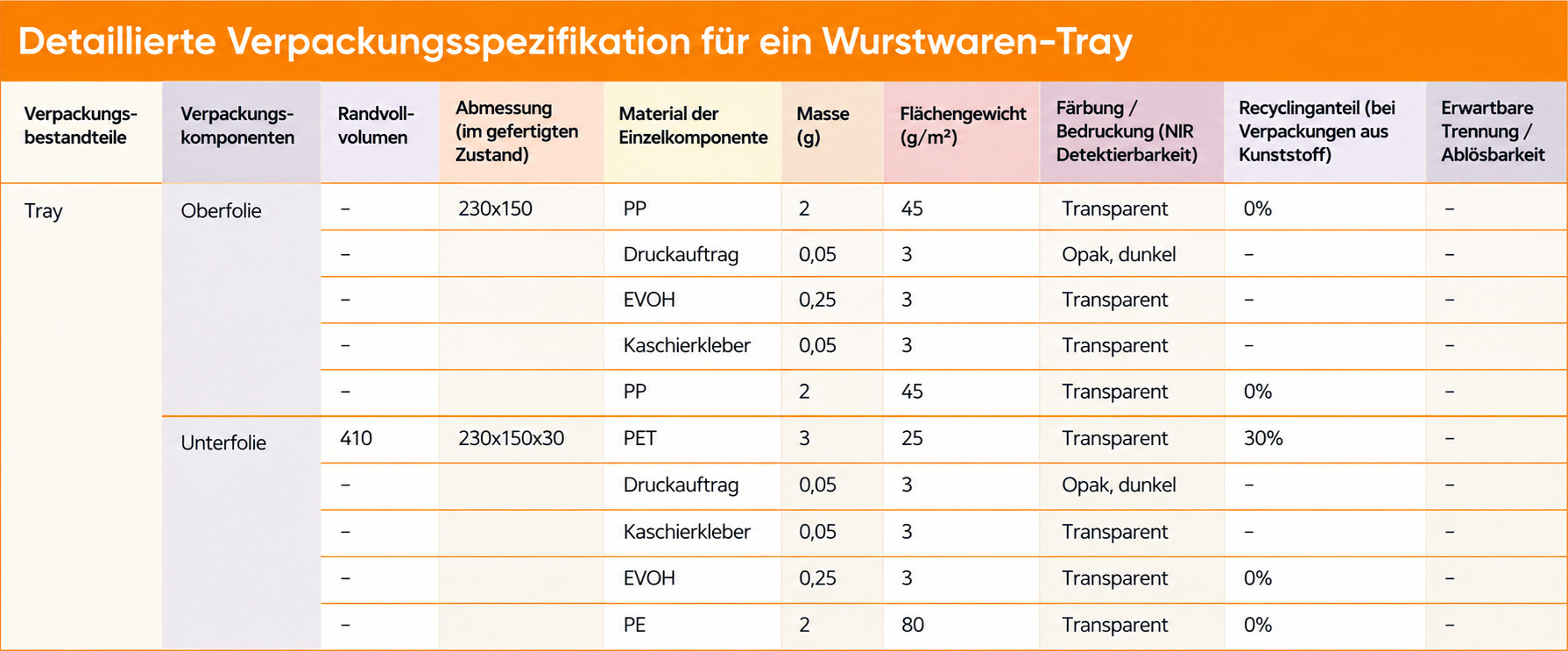
In the meat industry in particular, it is advisable to adopt a “packaging family” approach. Technically identical or sufficiently similar specifications can be documented collectively, provided that a clear association with the packaging, variant, and DoC is maintained at all times. This prevents a few hundred basic designs from suddenly turning into several thousand documentation projects.
For data management, we recommend using powerful specification software. One example is Packaging Cockpit, which, among other things, maps packaging specifications, components, weights, recyclability calculations, PPWR documentation, and supplier data to a central database.
Preparing Technical Documentation and the EU Declaration of Conformity
The first deadline has already passed: The PPWR has generally been in effect since August 12, 2026. Anyone who has not yet fully completed their technical documentation and EU Declaration of Conformity should do so as soon as possible. However, it is important to distinguish between the substantive requirements that are already applicable and those that will take effect later. The DoC must be kept up to date at all times.
A digital approach has proven effective in practice:
1. Create a central data source instead of distributing Excel files, PDFs, and supplier data across departments.
2. Form packaging families where the design and relevant properties are identical.
3. Uniquely identify each package and link it to its DoC.
4. Store supporting documentation directly with the data record—for example, test reports, supplier declarations, and material certificates.
5. Implement version control: If the material, layer structure, weight, or supplier changes, it must be clear which assessment and DoC are affected.
6. Define responsibilities: Purchasing acquires data, Development evaluates designs, Quality reviews supporting documentation, and Regulatory/Legal assesses legal compliance—the exact organizational structure must be tailored to the company.
7. Establish change management: Do not treat a film change as a purely purchasing decision if it could affect PPWR compliance.
8. Test readiness for regulatory review: The answer to the question “Can we demonstrate within a short time why a specific package is compliant?” must be “Yes.”
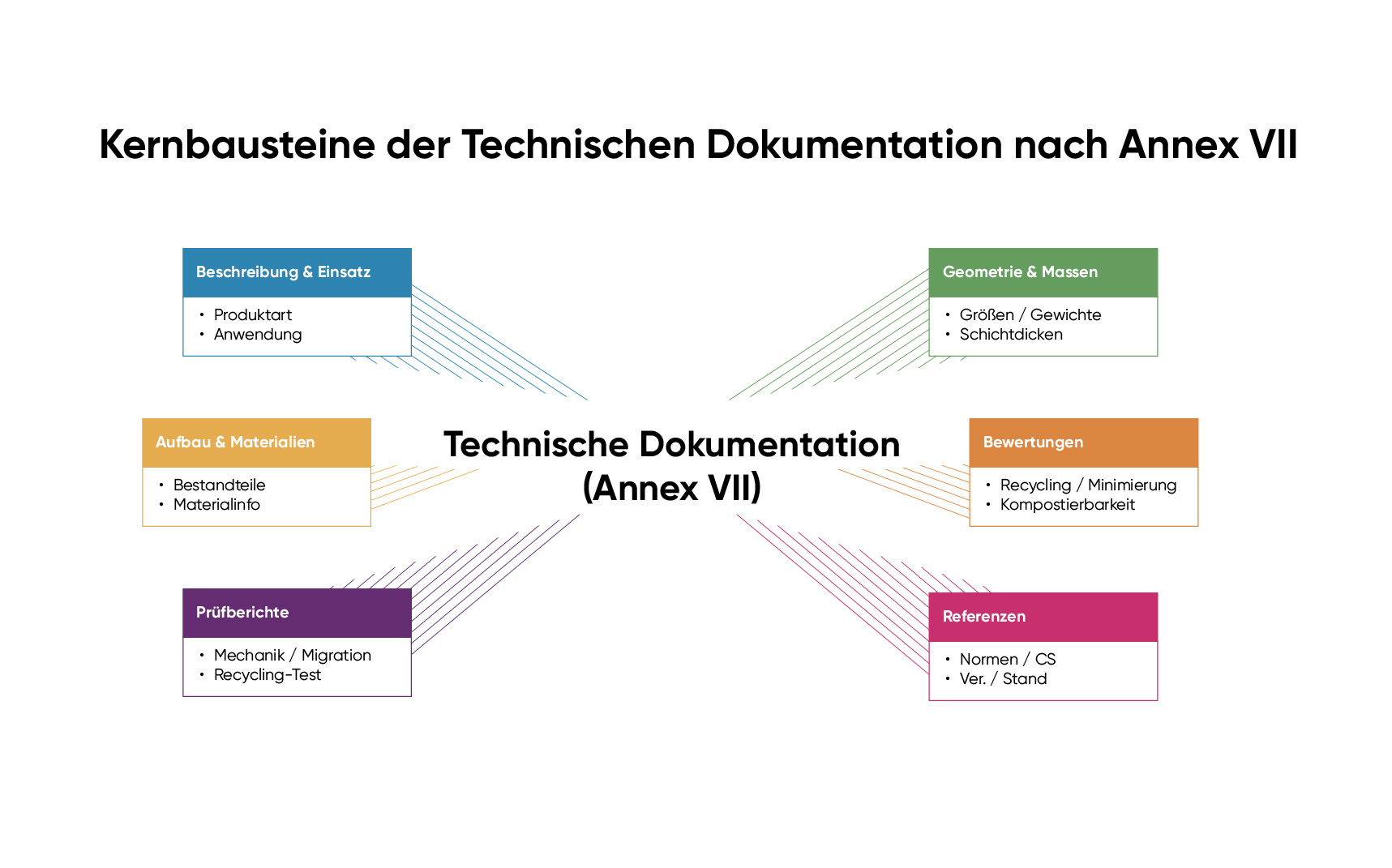
Annex VII requires, among other things, a description of the packaging and its intended use, drawings and material specifications, applicable standards or technical specifications, a qualitative description of the assessments pursuant to Articles 6, 10, and 11, as well as test reports.
2. Improve recyclability
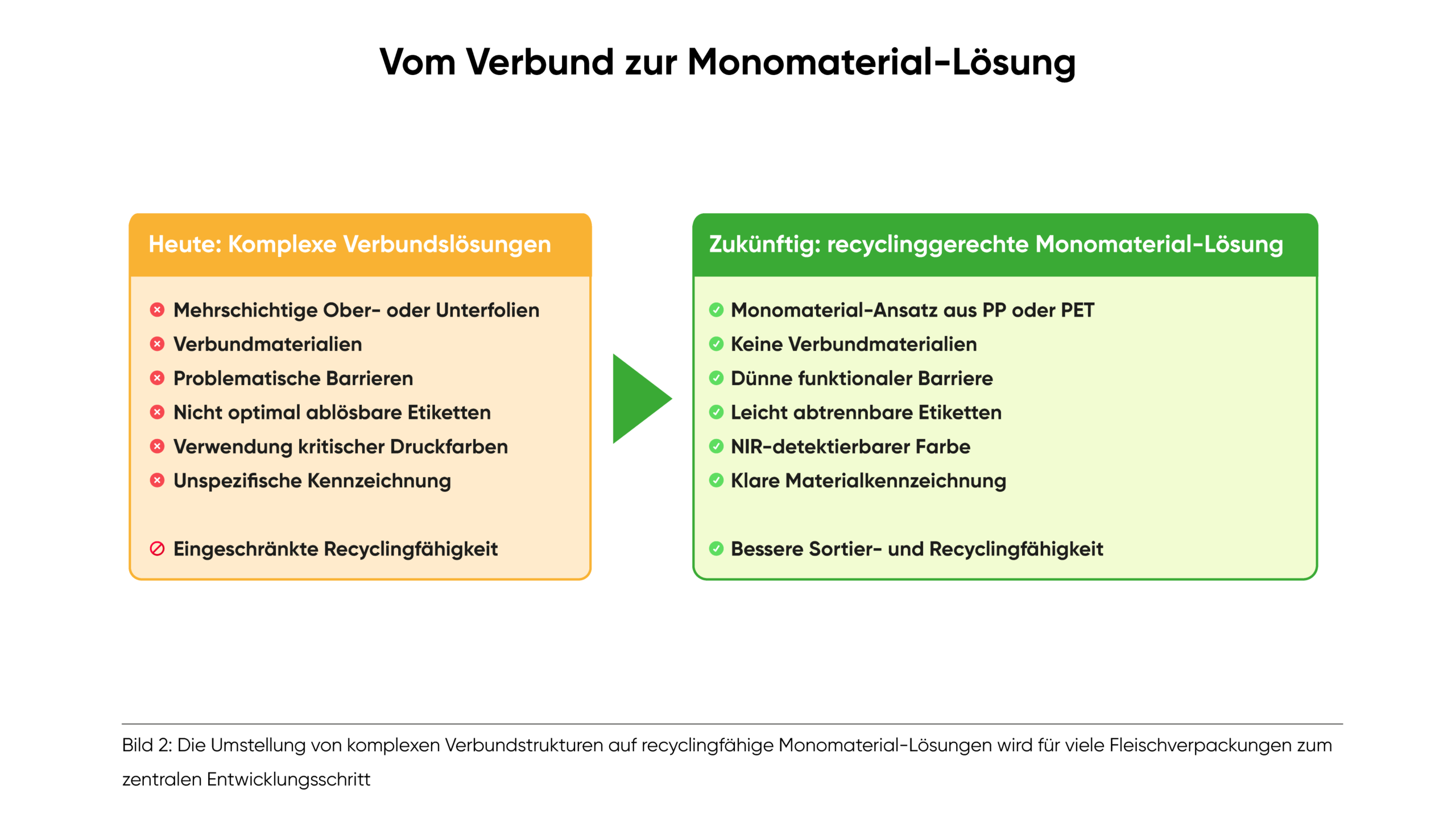
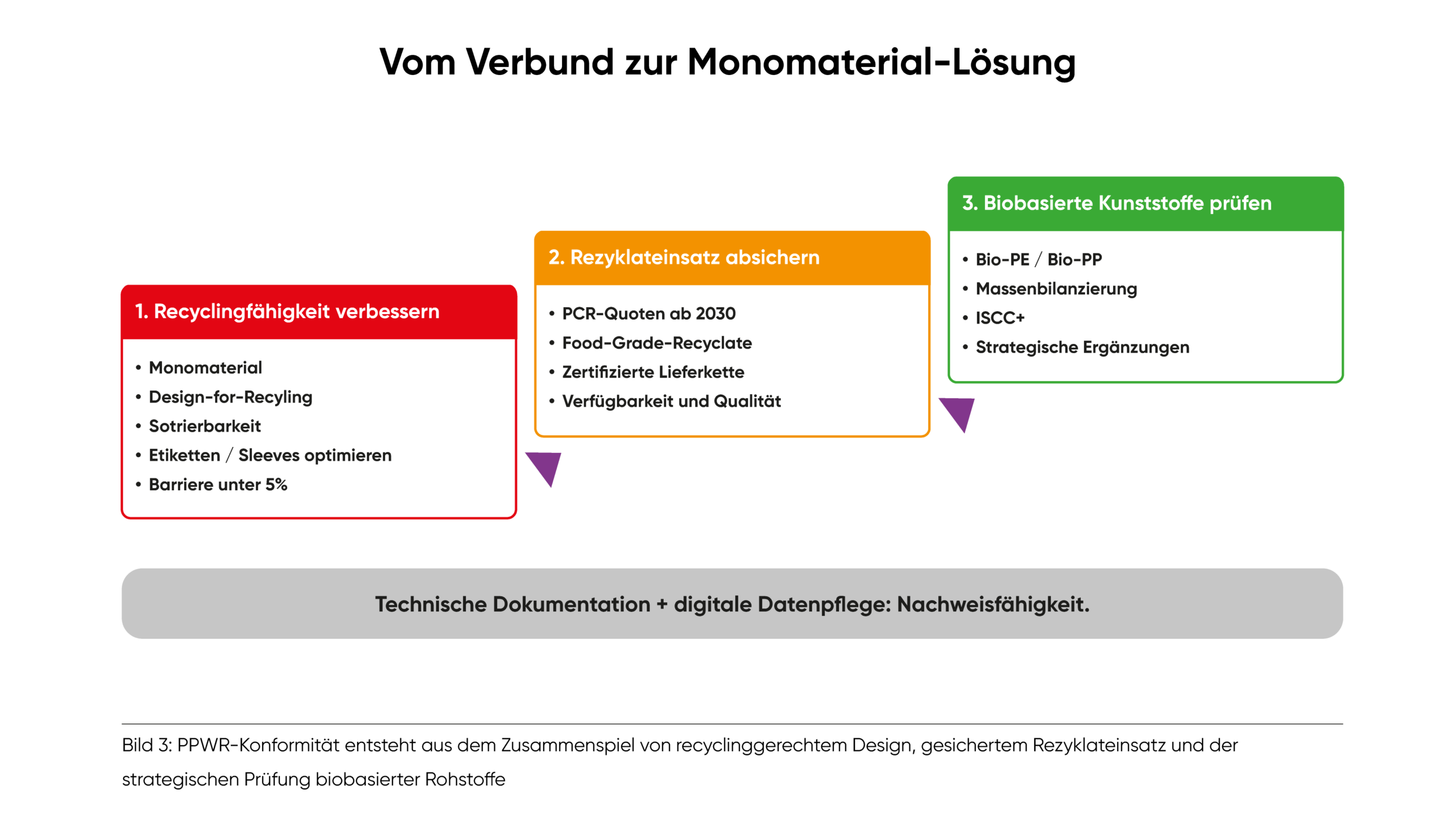
Every packaging design should be evaluated to determine whether it can meet the requirements of Article 6 of the PPWR in the long term. Single-material packaging is an important solution in this regard, but only if overall performance is not compromised.
Food safety remains the top priority, especially for meat packaging. Recycling optimization that compromises product protection in any way is not a sustainable solution. The PPWR itself requires that packaging continue to fulfill its function as well as relevant safety, hygiene, and food requirements.
A sensible development process looks like this:
Design -> Recycling assessment -> Product protection testing -> Production line trial -> Economic feasibility analysis -> Supporting documentation.
3. Promote the reduction of packaging
To do justice to the guiding principle of Article 10—“As much as necessary, as little as possible”—the practical approach involves systematically reevaluating headspace, wall thicknesses, tray heights, outer cartons, filling materials, stretch film, strapping, and e-commerce packaging.
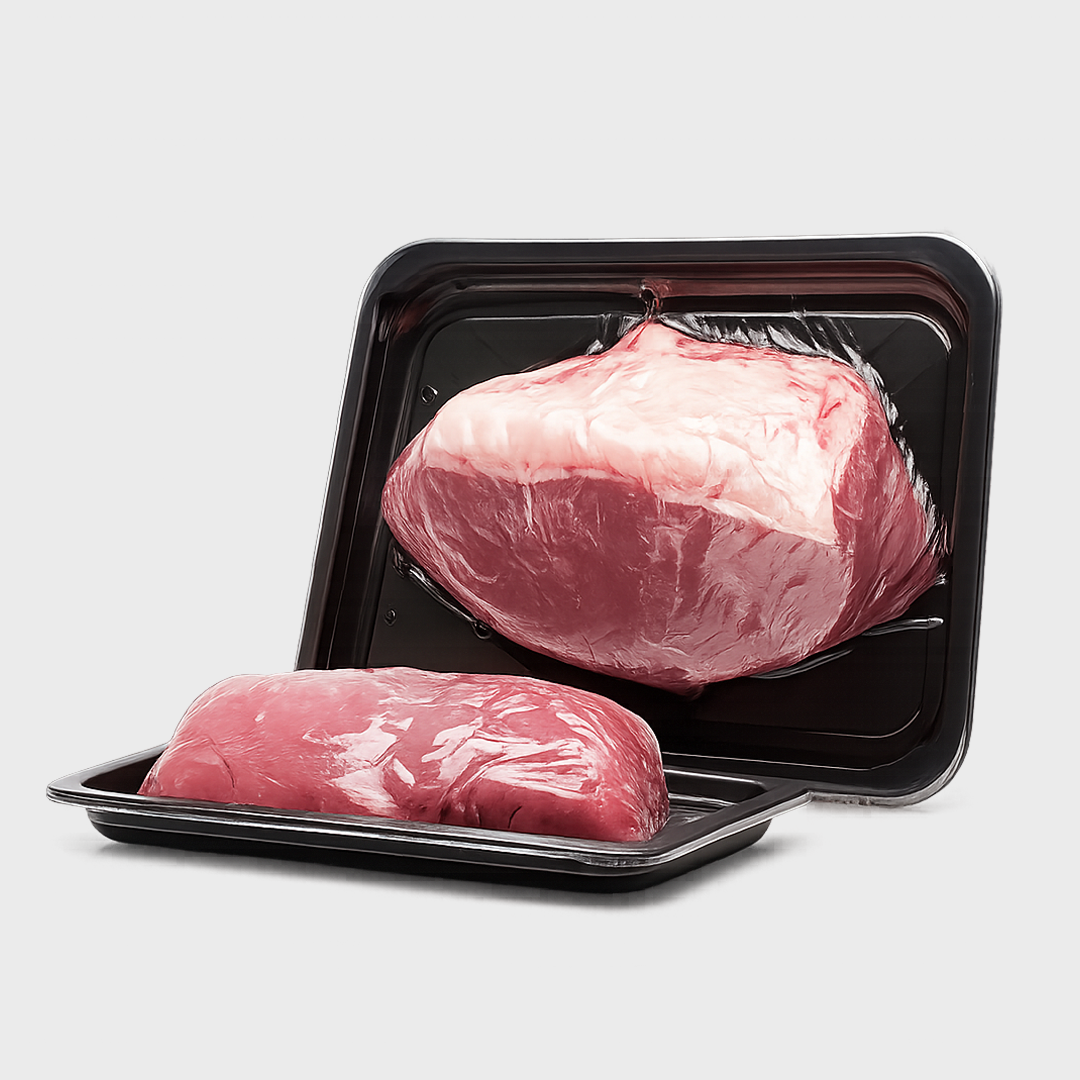
Take, for example, a tray for ground meat. Here, one could examine, among other things, whether a thinner wall thickness is feasible while maintaining the same stackability. With sausage products, the question may arise here and there as to whether outer cartons and bundling are actually necessary. In shipping, it’s possible to analyze whether carton sizes can be better adapted to the product’s geometry.
Incidentally, one thing that’s often overlooked is that good packaging minimizes not only material costs but also overall expenses. Thus, a thinner tray that breaks more often, generates more scrap, or runs more slowly on the production line is not a true optimization when viewed holistically.
That’s why companies should also develop fallback options. If, for example, a particularly distinctive shape, a large viewing window, or a specific convenience feature stands in the way of minimization, an alternative is needed: perhaps a different design, a different material thickness, or a different presentation approach.
For transport and e-commerce packaging, Article 24 also applies. In this context, the 50% void space limit will generally apply in the future. Even though the Commission will not finalize the exact calculation methodology until early 2028, companies should already begin measuring and documenting their current transport and shipping formats rather than waiting for the final calculation method.
And one more important point: The reduction must be verifiable. Anyone reducing weight or volume should document which function needed to be protected and why the chosen design represents the necessary minimum. The technical documentation is the appropriate place for this.
4. Develop a medium-term packaging strategy
The three steps outlined so far create transparency. After that, we need to look further ahead. This is because the progressively increasing requirements of the PPWR call for a roadmap extending to 2030, 2035, 2038, and 2040.
A good packaging strategy begins with an analysis of your own portfolio: What packaging do we have today? Which of these are strategically important? Which pose technical or regulatory challenges? And which variants can we standardize?
First Major Renovation by 2030
By 2030, the key requirements for recyclability, use of recycled materials, and minimization must be implemented in practice. With regard to recyclability, this means, in principle: at least Class C, preferably B or even A; anything below 70% is unacceptable.
In addition, the recycled content requirements of Article 7 generally apply at 30%, 10%, or 35%, depending on the type of packaging and plastic. For the meat industry, this means consolidating material portfolios.
Example: If five different film structures are currently used to package similar products, companies should examine whether these can be consolidated into two robust standard structures. The same applies to trays, lid films, labels, and transport packaging.
Fewer variants not only mean less complexity; they also improve the negotiating position in procurement, simplify supplier audits, and make PPWR data significantly more manageable.
Rezyklate strategisch absichern
The recycled content rate should not wait until 2029 to become a procurement issue. Rather, the meat industry needs to clarify the following questions today:
– Which PCR materials are technically viable?
– Which of these are suitable for food contact?
– What quantities will be available in the long term?
– What quality fluctuations exist?
– Which suppliers can provide reliable documentation?
– What effects do recycled materials have on color, odor, barrier properties, and mechanical properties?
– Which packaging designs may require alternative constructions?
Consideration: Bio-based plastics may, under certain circumstances, serve as a strategic wild card—for example, if high-quality PCR material is permanently in short supply or technically unsuitable for certain food-contact applications.
However: Nevertheless, no one should base their PPWR strategy on the assumption that bio-based materials will automatically replace the recycled content requirement. Article 8 stipulates that the European Commission will assess by 2028 whether and under what conditions bio-based raw materials can be taken into account in future regulations. The possibility of using bio-based materials in lieu of recycled content is explicitly contingent on future legislative measures and specific conditions. However, it certainly makes sense to keep an eye on developments in this area.
Audit Suppliers
A comprehensive PPWR strategy does not end at the factory gate. In the future, suppliers should be evaluated not only on price, delivery time, and technical performance, but also on their ability to provide reliable compliance data. Key elements for a well-designed supplier questionnaire:
– Complete material specifications
– weights and tolerances
– material and layer composition
– recycled content and documentation
– food contact compliance
– recyclability assessment
– changes from the previous specification
– test reports
– production location
– traceability
– responsibility for the respective DoC
This is not a bureaucratic end in itself. If, when changing a film type, a supplier simply states that it is “technically equivalent,” that may no longer be sufficient in the future. A PPWR-compliant supply chain requires verifiable data rather than mere assurances.
Plan Investments and Logistics Early On
If packaging becomes thinner, is designed differently, or becomes more standardized, this can have implications for machinery and logistics. A new tray may require different tools; an adapted film structure may alter sealing parameters; a reusable box requires a functioning return logistics system, efficient cleaning, and, of course, storage space; and a different carton format may affect existing palletizing or conveyor systems. For this reason, the packaging roadmap should always be linked to investment planning and a production strategy.
The question is not only, “Which packaging will be compliant in 2030?” but also, “Which packaging can we produce efficiently in 2030?”
Seriously Consider Reusable Options—But Take a Nuanced Approach
The PPWR also promotes reuse. Starting in 2030, economic operators must generally meet defined reuse rates for certain transport and retail packaging within the EU: For the packaging formats listed in Article 29, the target is generally 40 percent, rising to an ambitious 70 percent starting in 2040. Even stricter requirements apply to transport within a company or between affiliated companies. However, there are relevant exceptions, including for specific flexible packaging that comes into direct contact with food and for cardboard packaging.
For the meat industry, this does not mean that all vacuum packaging must now be replaced with reusable packaging. As mentioned earlier, hygiene, cleaning, product protection, and process safety are essential—especially for foods that are sensitive to contact. However, reusable solutions can certainly be of interest in the transportation sector—such as reusable plastic crates and containers or in-house logistics systems. In these cases, though, the decision should always be based on a comprehensive life-cycle assessment—not on the gut feeling that “reusable is always better.”
Preparing for E-Commerce Scenarios
The online grocery market is constantly evolving. Meat products, in particular, come with additional requirements: refrigeration, product protection, leak-proof packaging, temperature control, and, in some cases, significant mechanical stress. That is why companies should start exploring different shipping concepts today:
Option A: Optimized single-use cardboard box with minimal empty space
Option B: Standardized reusable box with return process
Option C: Hybrid solution with a reusable transport container and optimized inner packaging
The PPWR is increasingly making this a strategic issue. Companies that wait to consider new shipping packaging only after the 50% empty space limit takes effect are wasting time. As a reminder: The European Commission is scheduled to establish the calculation methodology for Article 24 by February 12, 2028; the actual obligation generally takes effect in 2030 or three years after the relevant implementing act enters into force, whichever is later.
A Look Beyond 2030
We recommend planning your packaging strategy now, looking beyond 2030. Starting in 2035, recyclability will no longer be based solely on design; “recycled at scale” will also be a factor. This means that packaging must not only be theoretically easy to recycle; there must also be a functioning infrastructure that actually recycles the material on a significant scale.
In 2038, the requirements for recyclability will be tightened once again: Class C will then be eliminated. What is still considered “sufficiently recyclable” in 2030 will no longer be permitted on the market eight years later. That is why every major packaging change today should be accompanied by a simple question: “Is this packaging not only compliant for 2030, but also a viable solution for 2035 and 2038?”
What Specifically Should Go on the To-Do List Now
For companies in the meat industry, a fairly straightforward sequence of steps can be derived from all of this:
Now: Compile a complete inventory of the packaging portfolio and clarify responsibilities.
Next: Standardize specifications, create packaging families, and request any missing supplier data.
In parallel: Carefully draft or complete technical documentation and EU declarations of conformity for the requirements that are already relevant.
Next: Assess critical packaging for recyclability—particularly composite structures, barriers, adhesives, labels, and decorations.
Then: Review material and packaging variants for minimization and document the corresponding evidence.
By 2030: Systematically align the supply of recycled materials, the material portfolio, recyclability, transport packaging, and e-commerce with the new requirements.
By 2035: Ensure that the selected material solutions are not only recyclable in terms of design but also accessible to a realistic recycling infrastructure.
By 2038: By this time at the latest, avoid investing in packaging solutions that, in the long term, will only achieve Class C status.
Closing Remarks
The PPWR is changing the way packaging is developed, purchased, evaluated, documented, and strategically planned for the long term—including in the meat industry. However, the industry does not have to reinvent its entire packaging system all at once. Those who get their data and responsibilities in order now, identify critical packaging, and develop a clear roadmap can address the upcoming requirements step by step.
In doing so, the PPWR should not be viewed merely as a ban. It also serves as an impetus to simplify packaging portfolios, reduce material variations, make supply chains more transparent, and integrate packaging development more closely with production, logistics, and procurement.
The most important step, therefore, may be the least spectacular one: don’t start with the new packaging, but with the data on the old packaging. Because only those who know exactly what is currently in their own packaging portfolio can decide what can stay tomorrow, what needs to be changed—and what would be better off disappearing altogether.
This also presents a major opportunity for the meat industry: Don’t view the PPWR requirements primarily as a “deadline,” but rather as a strategic packaging project. Then you can turn regulatory pressure into a genuine competitive advantage.
Other news
"Air Fryer" on the packaging: Is this the start of a new product category?