PackCheck solid deodorants – 7 packaging options compared
In the third edition of our PackCheck series, we take a look at solid deodorants, which are said to be more environmentally friendly and economical than traditional liquid deodorants and are therefore becoming increasingly popular. As usual, we analyse and evaluate the packaging of various products in terms of performance, design and sustainability.
This time, we compare seven packages that are surprisingly diverse. And there is a first: for the first time in the three-year history of PAX/PackCheck, we have two overall winners! Read on to find out how this came about.
Requirements and packaging options
Our PackCheck only covers solid deodorants, not creams. In principle, bars, crystals and sticks qualified for comparison. The following products and packaging solutions ultimately competed against each other:
1. Biork Crystal Deodorant: cork, stick mechanism
2. Dove: plastic stick, twist and extend mechanism
3. Solid Deodorant (yes, that’s the brand name…): folding box
4. Weleda Deodorant Stick: cardboard, stick mechanism
5. Speick: plastic stick, twist and extend mechanism
6. Wild: refillable aluminium case, twist and extend mechanism
7. Old Spice: plastic stick, twist and extend mechanism
The bar chart shows which solid deodorant received how many points in each evaluation category. Below the bare figures, you will find our detailed analysis of the qualitative performance, design and sustainability characteristics of all seven candidates, as well as details of our comparison winners and a conclusion.

Findings from the performance comparison
Performance winner: Wild
In terms of performance, the Wild brand comes out on top with a well-designed and durable packaging concept. Its refillable aluminium and plastic case combines protection and practicality at a high level. The starter set – consisting of an aluminium stick and a compostable refill pack made of bamboo fibres – signals genuine sustainability: once purchased, the metal case can be used indefinitely.
The minimalist, elegant design catches the eye on the shelf and is complemented by eye-catching outer packaging. The latter not only provides additional stability but also ample space for effective brand communication.
In terms of application, Wild scores points with a proven twist mechanism for effortless portioning of the product and generally pleasant handling.
Only the emptying of the remaining product is not entirely convincing – slight residues remain in the packaging, but this is ultimately of little significance.
Further observations
The deodorant packaging examined clearly shows how versatile the balance between protection, function and design can be.
Established formats such as the twist-action plastic sticks from Dove, Speick and Old Spice achieve consistently solid results. They offer reliable product protection, intuitive usability and practical closure solutions. The differences lie in the details: while Speick impresses with its uncomplicated opening, Dove and Old Spice require noticeable effort. Nevertheless, both convince with proven mechanisms and attractive designs.
Biork offers an exciting contrast: the cylindrical cork tin looks high-quality and natural and clearly stands out from the competition. It reliably protects the crystal stick inside. However, it is not particularly user-friendly because the stick needs to be moistened. And although product residue can be removed from the base, it cannot be reused.
Weleda pursues a sustainable approach with a cardboard-based wraparound tin. Its ease of use and complete emptying are clear advantages. At the same time, the packaging reveals weaknesses in durability: the inner construction is susceptible to grease penetration and mechanical wear. In addition, the closure mechanism can become stiff with prolonged use.
“Festes Deo” offers the simplest solution of all the brands in our comparison – but it also delivers the weakest performance. The cardboard packaging with a paper sleeve looks friendly and minimalist, but offers only limited protection. On the one hand, the sleeve sits loosely on top of the case and does not close it completely; on the other hand, the packaging remains open at the edges, which does not adequately protect the product from external influences, such as when carried in a bag.
All in all, it is clear that combining sustainability and functionality is a key issue in the solid deodorant market segment. While refill concepts such as those from Wild point to a sustainable way forward, alternative materials such as paper or cork are (still) reaching their practical limits. The decisive factor remains how well a packaging design strikes a balance between protection, user guidance and brand impact – in other words, how holistic it is.
Findings from the design comparison
Design winner: Weleda
Weleda emerges as the clear design winner in our PackCheck. The packaging combines the brand’s characteristic naturalness with systematic clarity. The interplay of typography, colour coding and lovingly designed illustrations gives it a harmonious yet lively appearance. The Waldorf-inspired font and the well-thought-out colour concept with light, soft tones bring vibrancy to the shelf without being visually overwhelming. All statements – from USP messages and information on the protective period to communication of the brand identity – are optimally placed. Weleda demonstrates how attitude, differentiation and shelf impact can be skilfully harmonised.
Further observations
In second place is Speick – a classic that shows how stringent brand management can also work with a minimalist design. A few concise design elements ensure that the brand is consistent and easy to find on the shelf. The combination of the typical blue base colour with the striking red ensures high recognition. A clear identity without visual excitement, but with trust through consistency: Speick is a prime example of the well-known design approach ‘less is more’.
Wild scored just as many points as Speick in the design category, tying for second place. The brand positions itself as a hip refill brand for a younger target group. Its design is urban, light and confident, with clear, bold typography, unexpected colour nuances and a minimalist container shape. Wild manages to convey a modern attitude to life and distance itself from the classic natural cosmetics look. The packaging concept – refill plus outer packaging – also appears well thought out, although the information hierarchy and variety logic could be optimised in some areas.
Biork focuses on a strong material effect: the contrast between natural cork and technical-looking typography in bold blue stands out visually and is memorable. With the open, uncoated surface of the material, the brand communicates naturalness and a rejection of the superfluous.
In terms of design, the typography could be a little more refined, but this does not detract from the positive overall impression – especially thanks to the choice of material, which stands out from the competition. Dove remains true to itself – white, soft, friendly. The classic design conveys trust and expertise in skincare, but comes across as somewhat static and unsurprising.
As much as the brand has successfully positioned itself as a ‘feel-good brand’ over the decades, it lacks creative innovation – and a more daring design concept would have been appropriate for a future-oriented product such as solid deodorant. Apart from the lack of visual stimuli that stick in the memory in the long term, the hierarchy of information is not optimally resolved.
Festes Deo shows good typographic and illustrative approaches, but overall comes across as somewhat too restrained. The product name is both the brand name and a description of the product’s function – very clear, but not very emotional. Although the pastel colours, soft illustrations and minimalist look speak a common, harmonious design language, there is a lack of distinctive style and, as a result, differentiation and recognisability.
Festes Deo uses a design that is well thought out but quickly forgotten. Old Spice comes last in our comparison. There is nothing wrong with the iconic red base colour – it is typical of the brand and therefore a good design basis. However, the overloaded packaging concept is distracting:
The combination of chaotic typography, ironic statements and playful elements causes confusion rather than providing guidance. And the formerly clear brand message – freshness, masculinity, self-irony – is diluted by this confusing design. The attempt to appear youthful and peppy makes the brand seem less competent and breaks with its former brand DNA.
Let’s be clear: the brands analysed in our PackCheck deal with the design question in very different ways. From consistent brand management and modern lifestyle communication to material-based differentiation, there is a wide range on offer. The frontrunners are brands that offer a clear stance, a clean design system and a consistent brand experience. The packaging from Weleda, Speick and Wild shows how design can not only be aesthetically pleasing, but also create trust and provide guidance.
Findings from the sustainability comparison
Sustainability winner: Solid deodorant (for single use), Wild (for multiple use)
In the sustainability comparison, the Festes Deo brand impresses with its cardboard sleeve and paper band. The purely paper-based packaging is made from renewable raw materials, contains no plastic whatsoever and can be disposed of in the waste paper stream. Thanks to the low packaging weight, the product-to-packaging ratio is very good. Our only criticisms relate to the full-surface printing of the sleeve and the lack of clear disposal instructions; These aspects somewhat limit recyclability and consumer guidance.
If the primary and secondary packaging are considered in terms of single use, Wild’s packaging performs significantly worse than the solution from Festes Deo: the durable aluminium and plastic sleeve can only be recycled with considerable effort. However, the refill system is a positive feature: the packaging made from bamboo fibres is free of plastic and requires only 11 grams of material for 40 grams of product. If we include this refill concept and the associated long-term use in the evaluation, the result is completely different and Wild shares first place with Festes Deo.
Further observations
Biork relies on cork as a single material. The raw material is renewable and biodegradable, but cannot be recycled via normal household waste collection. Declaring the packaging as ‘100% recyclable’ therefore seems problematic without corresponding disposal instructions.
Weleda’s packaging is also made of a single material, in this case cardboard, and is material-efficient, but its recyclability is limited by product-related internal contamination. In addition, the large headspace is a negative factor.
Dove, Speick and Old Spice use plastic packaging that is largely made of polypropylene and can be easily integrated into existing recycling systems. Nevertheless, these are multi-part, bulky designs that use a lot of material – mostly without clear instructions on how to separate or recycle them.
Overall, it is clear that packaging made from single-type paper, such as the cardboard sleeve with cardboard band used by Festes Deo, is currently the most sustainable solution – simple, lightweight and easily recyclable. Alternative options lack material separation, a sensible recycling infrastructure and/or clear consumer communication.
The 2 winners of our PackCheck for solid deodorants
This PackCheck presents a special situation: depending on how it is used – once or multiple times with a refill system – a different solid deodorant wins our comparison.
Overall winner 1: Wild
When we include the refill system for multiple use of the packaging in the evaluation, Wild is the clear winner with 977.5 points. The convincing combination of well-thought-out design, material-efficient refill system and good brand communication is thus rewarded. While we have to critically evaluate the aluminium sleeve on the basis of its single use, we can in good conscience give it a high score in the sustainability category, taking into account its intended long-term use.
The overall concept has enormous potential: less packaging waste, reduced material costs per application and a consistent brand image make Wild a best-practice example of sustainable circular solutions with design appeal. The brand proves that sustainability and performance can be combined if you are prepared to think beyond the packaging lifecycle.
Other news
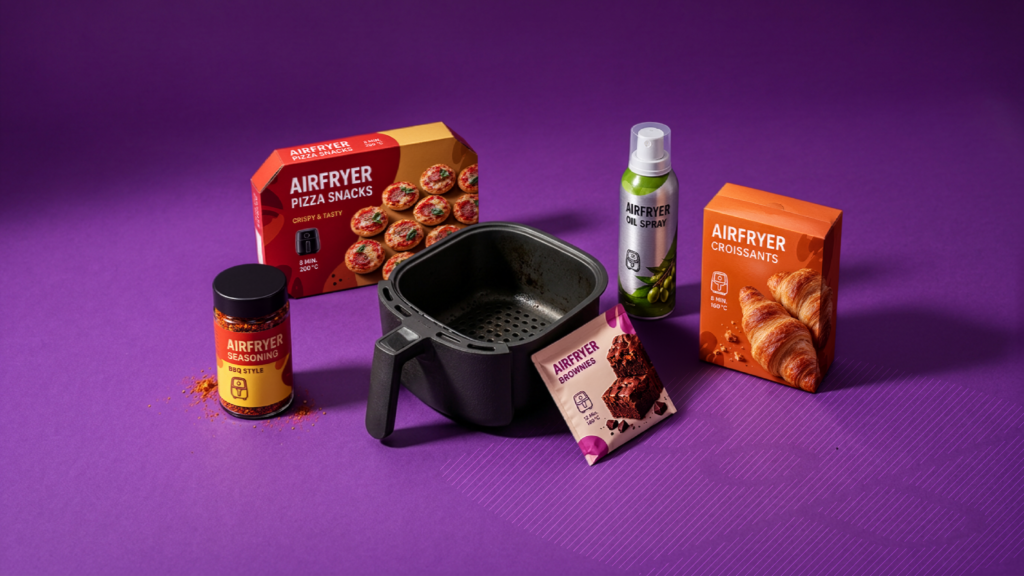
"Air Fryer" on the packaging: Is this the start of a new product category?