PackCheck Hairstyling – 14 packaging options compared
Our PackCheck Number 5 focuses on products from the hairstyling department. We carefully examined 14 packages from well-known brands such as Nivea, L’Oréal, Schwarzkopf, and got2b, analyzing and comparing them in terms of performance, design, and sustainability. Below, we reveal which packaging impresses or leaves something to be desired in each category and which brand wins the PackCheck with a convincing overall performance.
Requirements and brands analyzed
Unlike most previous PackChecks, this time we did not limit ourselves to a specific format or product type, but considered gels, waxes, oils, creams, and hybrids equally. Accordingly, this comparison covers various items that are designed to help us style our hair. Some come in classic tubes, some in pump dispensers, and some in jars. Here is an overview of the brands and products analyzed:

The bar chart presents the “hard,” quantitative results of our PackCheck—i.e., the number of points each product scored in the three evaluation categories of performance, design, and sustainability, as well as its overall score. Below, we go into detail about the “soft,” qualitative results for each type of packaging.

Findings from the performance comparison
Performance winner: got2b iStyler
The packaging of the got2b iStyler offers excellent product protection and high stability in principle—it remained undamaged in the drop test. In addition, the packaging design stands out from the competition at the point of sale: on the one hand, thanks to its flat, compact, stackable shape and, on the other hand, thanks to the clever use of the label, which significantly increases the eye-catching surface area, attracts attention, and creates space for styling tips on the back. Opening and resealing are simple and intuitive. In addition, the product can be emptied very easily. In short, the packaging performs well across the board.
Further observations
In the hairstyling segment, jars, usually with screw caps, are mainly used today. Tubes are also frequently used. Pump dispensers and bottles are only encountered in isolated cases. Let’s take a closer look at the four types of packaging.
Jars
The typical round shape is an unmistakable feature that clearly sets jars apart from the competition on the shelf. They are mainly made of aluminum or plastic; in the case of plastic, this is usually PP (polypropylene). Thanks to their large opening and easy accessibility, they are much easier to empty than tubes and pump dispensers. In addition, jars offer the best product protection and stability in comparison, because unlike the caps on tubes or pump dispensers, the screw cap remains in place when pressed or dropped, keeping the product sealed. Most jars can be opened easily, i.e., without any difficulty in understanding how to do so and with little effort. Exceptions:
– Eco: Removing the seal label is somewhat tedious, and opening the flip-top lid and resealing it also requires some force.
– TIGI Bed Head: Gel adhering to the lid can form strings and smear due to the consistency of the product.
– Störtebekker: Opening the aluminum jar requires slightly more force than most similarly designed packaging.
Eco is also the only product that has a flip-top lid. This solution has both advantages and disadvantages. It is practical that the jar can be handled with one hand after removing the tamper-evident seal; however, the flip-top lid pops open easily when dropped—in fact, of all the jars in the PackCheck, only Eco’s failed the drop test. Apart from that, the packaging can be resealed, but not with the desired security or reliability.
Tubes
Unlike when removing product from a jar, fingers do not come into complete contact with the hairstyling product when using a tube, which makes it practical and hygienic to use. It also offers the largest display area – ideal for attracting attention at the point of sale.
The disadvantage is that it is relatively difficult to empty completely. This is particularly evident with the Brisk tube, which is made of a much thicker material than Schwarzkopf OSiS+ and Taft, making it less flexible and noticeably more difficult for the user to remove the remaining product. In and of themselves, tubes provide very good product protection; however, they are more sensitive to pressure.
Pump dispensers
Pump dispensers enable controlled, consistent dosing per pump stroke – and thus clean, hygienic application. Only the first time does “priming” of the pump require effort; thereafter, the packaging responds to each pump stroke as desired. Both the airless dispenser with a rising piston from Wella and the airless pouch system in the extrusion-blown container from Kastenbein & Bosch are airtight, which means that the products they contain have a longer shelf life.
As with tubes, the display area at the point of sale is larger for pump dispensers than for jars, and it is difficult to empty them completely. However, there are notable differences with regard to the latter aspect: Wella Shockwaves, for example, can be emptied more completely than most other pump dispensers thanks to its rising inner base, while with Kastenbein & Bosch, additional residue remains in the inner pouch. Although it has an advantage in this criterion, Wella ultimately performs worse than Kastenbein & Bosch in our performance check; this is primarily because the Shockwaves lid broke in the drop test.
Bottle
The only bottle representative in our PackCheck comes from East Moon. The very good product protection and the fundamental advantage of the comb included for practical application are offset by relatively poor handling: on the one hand, the product drips from the comb and, on the other hand, the ability to empty the bottle completely leaves something to be desired. Why? Because the comb does not reach the bottom of the bottle, which is also curved, making it even more difficult to remove the product. As a result, (too) much liquid remains at the end.
Findings from the design comparison
Design winner: got2b iStyler
The got2b iStyler wins the design comparison because the concept combines visibility, guidance, and relevance in an exemplary manner. Its striking “billboard” front visually elevates the flat product; the special shape and bold, cleanly orchestrated colors work together harmoniously; and the reading guide remains clear from any distance. The brand thus addresses a young, fun-oriented, largely gender-neutral target group (slightly female in perception) without getting lost in details. From form and function to colors and typography to information hierarchy and branding, the packaging for the got2b iStyler is impressive in every respect. It generates maximum attention and anchors itself in the minds of consumers with its clear brand identity—given these characteristics, its first place ranking is more than justified.
Further observations
In addition to the got2b iStyler, there are several other extremely successful designs among the packaging analyzed. With only ten points behind, seinz. ranks second. The brand impresses with its very masculine, minimalist, and reliable appearance—strong in target group fit, brand cliché, typography, and form. It presents itself as confident and clean and remains consistently true to its own line.
Nivea follows close behind, a high-quality, approachable all-rounder with a clear information hierarchy and harmonious proportions. The packaging scores very well in terms of concept, readability, and typography. Compared to got2b, the brand presents itself as slightly less “loud.”
Taft demonstrates how conscious reduction works with its simple typography, uncluttered surfaces, and ergonomic tube. The design ensures high readability and good handling.
got2b comes in fifth place in the design comparison – this time with its Strand Matte product. Here, the brand makes a fresh, playful statement with aluminum in portrait format and cool colors. The packaging design is clearly aimed at younger men.
TIGI Bed Head appears young and edgy thanks to its transparency and layering with a 3D effect, but this suggests more volume than is actually contained. Nevertheless, the packaging earns high points in the design category thanks to its shape and creative design.
The packaging of Schwarzkopf OSiS+ is characterized by its matte surface, well-managed hierarchy, and clever use of white space. It presents itself as modern, cosmetic, and lifestyle-friendly. The subrange remains clearly recognizable—the special shade of red carries the brand.
In the mid-range, Störtebekker serves the high-quality barber niche for a very specific target group. Although the concept is cleanly implemented, it hardly stands out or catches the eye on mass retail shelves.
L’Oréal Studio Line shows Y2K/millennial influences: the packaging design is solid and understandable, but in terms of colors, typography, and depth of detail, it is ripe for a gentle refresh.
Wella Shockwaves appears fragmented and is limited in its design by the shape of the bottle. Product recognition remains good, but the overall effect is modest.
Let’s move on to the four latecomers in the design category:
Kastenbein & Bosch is informative, unexciting, and visibly Internet/social media-driven—functional, but without an elaborate design strategy.
Eco delivers a 90s flashback with glitter paper. Form and function are fine; colors, typography, and transparency (the “Eco” message is ambiguous) are weak, however.
Similar to Störtebekker, East Moon targets the upscale barber segment. However, the claim does not harmonize with the actual implementation: simulated gold gradients and the plastic look ultimately make the packaging appear rather cheap.
Brisk comes across as very traditional and nostalgic and is clearly aimed exclusively at men. The form and design seem outdated and could use a contemporary update.
Findings from the sustainability comparison
Sustainability winner: L’Oréal
L’Oréal ranks only in the middle of the pack in the categories of performance and design, but its packaging is clearly ahead in terms of sustainability. The jar is made entirely of PP, which makes it highly recyclable. It is also transparent, with only the lid being translucent. Its compact size contributes to efficient material use. Compared to other packaging, labels are also used very sparingly. The only area for improvement is consumer guidance: to make disposal easier for consumers and thus boost recycling, it would be useful to add specific instructions. All in all, L’Oréal’s packaging is an excellent mono-material solution that rightly tops the sustainability check.
Further observations
In principle, mono-material jars are more sustainable than tubes or multi-part and comparatively material-intensive pump dispensers. The latter have the highest packaging weight in relation to their filling volume. Of all packaging types, tubes are the most compact and therefore the most space-saving to dispose of – but only if the material is not too thick and solid.
In general, there is a lack of sustainability symbols and information on packaging in the hairstyling segment. Schwarzkopf OSiS+ and East Moon are exceptions. The other brands would do well to integrate sensible disposal instructions into their designs, as many types of packaging would perform well in recycling if disposed of correctly or if components made of different materials were carefully separated. The best examples are Nivea and TIGI Bed Head: both use a plastic jar with an aluminum lid. Both the jar and the lid belong in the yellow bin, but must be separated from each other before disposal, because otherwise the entire packaging will end up in the aluminum stream during the sorting process, where the plastic will unnecessarily accumulate as a contaminant.
Nivea’s sustainable and low use of materials is particularly noteworthy: the jar is made of rPET, i.e., recycled PET, and the walls are relatively thin. However, the use of recycled material could be communicated more clearly—many consumers do not understand the term “rPET.” We must note, however, that the very dark color of the plastic reduces the recyclability of the Nivea jar. As explained above, most consumers do not separate plastic jars and aluminum lids – clear disposal instructions could significantly increase the recycling rate.
Apart from the additional eye-catching label, the use of materials and design of the got2b iStyler are quite efficient. The mono-PP jar is highly recyclable. Although it is opaque, this is less of an issue with PP than with other plastics. This means that the container can be easily recycled.
Hisz. also opts for a mono solution: an aluminum can that is not directly printed on and has minimal labeling. A rubber ring is inserted into the edge of the lid to seal it. However, this has only a minimal negative impact on the sustainability score, while significantly increasing product protection. One more word about the material: aluminum is more resource-intensive to produce, but seinz. jars always contain a proportion of recycled material.
Compared to seinz., the got2b Strand Matte packaging, which is also made of aluminum, has no labels but is instead printed directly onto the container. Due to its slightly thicker walls and completely colored lid, got2b Strand Matte scores lower than seinz. packaging in the sustainability category. A thin, round plastic plate inserted into the entire surface of the lid serves as a seal. The advantage of this solution is that it is not connected to the lid. The disadvantage is that it is very difficult to remove, which is why consumers usually simply dispose of it together with the lid. In addition, this sealing variant requires slightly more material. In principle, however, the packaging is easy to recycle.
In the case of Störtebekker, the additional folding box stands out negatively. The aluminum jar alone provides sufficient protection for the product and is also printed with all the essential information. This means that the use of the box is unnecessary. The aluminum container is easily recyclable. This also applies in principle to the folding box; however, the black printing over the entire surface is disadvantageous for paper recycling.
The pump dispensers from Wella Shockwaves and Kastenbein & Bosch are multi-component systems, which are often more difficult to recycle, even though the bodies are made of PP. The comparatively high use of materials, the multi-part design, and the fact that the elements cannot be dismantled into their individual parts cost the packaging many points. In the case of Kastenbein & Bosch, the product residues remaining in the inner bag also interfere with recycling.
The tubes from Schwarzkopf OSiS+, Taft, and Brisk land in the middle of the pack in the sustainability category. They enable comparatively volume-saving disposal, especially since the brands—with the exception of Brisk—offer material-efficient, thin solutions. The disadvantage is that the HDPE tubes and PP caps cannot be separated and must therefore be disposed of together. In addition, the packaging is either dyed throughout (as with Schwarzkopf OSiS+) or printed over the entire surface (as with Taft and Brisk). The completely black tube from Taft is difficult to detect in the sorting stream and therefore particularly critical in terms of its recyclability. Schwarzkopf OSiS+ includes disposal instructions. Although the Taft packaging features the “be smart, recycle” initiative logo, it does not provide any information on how the packaging should actually be disposed of or recycled. The accompanying link to the initiative also does not provide any information on this.
With its large transparent surface and no additional labels, Eco’s mono-PP jar is rock-solid in terms of recyclability. The deductions are primarily due to the slightly higher material usage caused by the hinged lid.
In the case of TIGI Bed Head, we consider the combination of a plastic jar and aluminum lid to be disadvantageous because consumers often do not separate the components. The double wall, which is used as a design element, also loses points in terms of sustainability due to the high material usage. Furthermore, the brand uses an atypical plastic – the material is labeled as “Other” and is therefore presumably less recyclable because it does not belong to any established stream.
East Moon uses a transparent PET body that is easy to recycle. Negative aspects include the high material usage due to the application aid and the additional folding box, which is also printed in dark colors. In addition, product residues remaining in the bottle can interfere with recycling.
Summary and winner of our hairstyling PackCheck
A trend is currently emerging in the market for hairstyling products: the boundaries between the classic categories are becoming blurred – gel, wax, oil, cream, etc. are increasingly being replaced by hybrid solutions such as cream wax, oil gel, or gel cream. This development makes packaging that provides orientation on the shelf, works intuitively, and is also recyclable increasingly important. Our analysis therefore focuses on visibility and recognizability (design), protection and handling (performance), as well as material system and consumer guidance (sustainability and, in some cases, design).
The iStyler from got2b comes out on top in the overall comparison because it combines design impact and everyday practicality in an exemplary manner. The striking “billboard” front makes the otherwise flat packaging appear large on the shelf, while the compact, stackable shape remains extremely practical when on the go. Opening, resealing, and emptying the remaining product are self-explanatory and neatly solved. In terms of sustainability, the concept with the mono-PP jar and reduced labeling is solid, although L’Oréal and seinz. are ahead in the pure sustainability score. However, considering the eye-catching design, combined with clear user guidance and robust handling, the packaging of the got2b iStyler deserves the overall victory.
Hisz. follows closely behind with a very masculine, minimalist, and reliable appearance. The jar looks high-quality and the consumer guidance is clear. Third place goes to another got2b product: Strand Matte.
Nivea in fourth place is a high-quality, approachable all-rounder with a clever information hierarchy and harmonious proportions – and L’Oréal is our sustainability champion: a compact mono-PP jar, minimally labeled and easily recyclable – the only thing missing is clear instructions on how to separate the components.
Schwarzkopf OSiS+ performs well in terms of performance and design, but falls behind the best in the sustainability comparison. With its ergonomic tube and clear typography, Taft proves how conscious reduction can work on mass retail shelves.
Störtebekker ranks in the middle in all three evaluation dimensions and also overall – the product is neither particularly positive nor negative. Eco scores points for its ease of use, but its design seems a little old-fashioned.
Among the lower-rated items is the Wella Shockwaves pump dispenser, which is hygienic to use but loses points for its inability to empty completely. In addition, the lid proved to be unstable in our drop test: it broke.
In addition to Wella, the last five hair styling products in our comparison include TIGI Bed Head, Brisk, East Moon, and Kastenbein & Bosch.
Key findings in each category at a glance
Performance: Jars provide the best product protection and the best emptying of residual product. Tubes and pump dispensers typically shine with a large POS area and hygienic dosing, but often reveal weaknesses in terms of pressure stability, material efficiency, and emptying of residual product.
Design: Striking surfaces and clear shapes have prevailed. Simplicity works when the brand name, typography, and reading guidance are precise. In the age of gel-wax-cream hybrids, packaging must clearly communicate what it contains and how the product should be used.
Sustainability: Single-material jars, especially those made of PP, achieve the best scores in terms of recyclability. Some concepts could perform well in recycling if consumers disposed of the components correctly. Those who rely on consumer cooperation must ensure that the packaging is easy to separate and integrate clear disposal instructions into the packaging design—especially for critical material combinations such as plastic containers and aluminum lids.
Three statements from our managing director Christoph Waldau
“Visibility without ease of use only achieves half the effect.”
The got2b iStyler shows how form, surface area, and simple mechanics work together: shelf billboard, intuitive opening, clean emptying of residues—this is how you win at the point of sale and with consumers in everyday life.
“Single material beats complexity – and labeling is crucial.”
With its mono-PP jar, L’Oréal demonstrates what true recyclability looks like. The only thing missing here is clear separation instructions so that what is constructively possible actually makes it into the system.
“The line between gel, wax, and cream is blurring – and packaging must provide guidance.”
For hybrid textures such as cream-wax, oil-gel, or gel-cream, iconic shapes, precise labeling, and clear dosing logic become fundamental success factors. Packaging is always (also) product guidance.
Other news
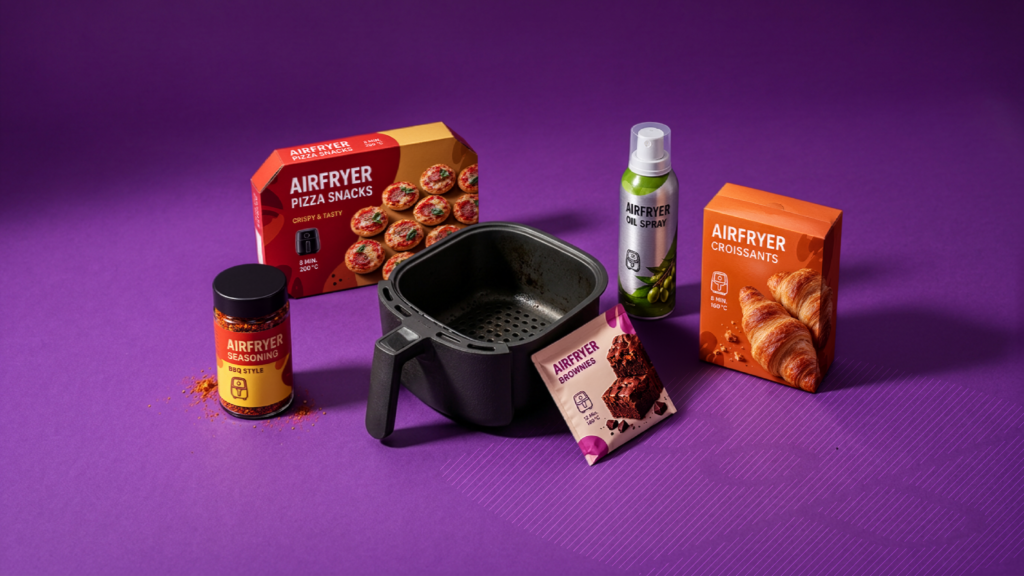
"Air Fryer" on the packaging: Is this the start of a new product category?